Americans observe a day of reflection in hopes that it may inspire stronger efforts at compromise between North and South.

Exploring the most important 55 months in American history
Americans observe a day of reflection in hopes that it may inspire stronger efforts at compromise between North and South.
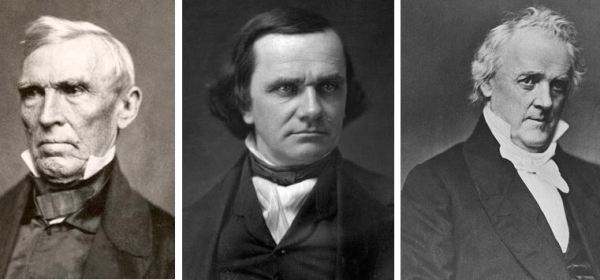
The Senate fails to adopt John J. Crittenden’s compromise plan due to Republicans’ refusal to expand slavery. This prompts more last-ditch efforts at conciliation, but it demonstrates the deep division that threatens to permanently break the Union.

The new year opens with South Carolina commissioners responding to President James Buchanan’s refusal to withdraw the Federal troops from Fort Sumter in Charleston Harbor.
South Carolinians complete their seizure of all Federal property in Charleston Harbor except Fort Sumter. President James Buchanan hesitates before finally issuing a statement to the South Carolina commissioners and preparing to take action.

The adversarial relationship between Secretary of War John B. Floyd and the rest of President James Buchanan’s cabinet worsens when news arrives that Major Robert Anderson had moved his Federal garrison to Fort Sumter in Charleston Harbor. Floyd leads the southern cabinet members by insisting that Anderson withdraw, while northern members insist that Anderson stay.

The transfer of Major Robert Anderson’s Federal garrison to Fort Sumter in Charleston Harbor provokes intense reactions in the days that follow.